

Ngorongoro Crater A World Within a World.
Descend into an ancient volcanic wonder where breathtaking landscapes, extraordinary wildlife and unforgettable safari experiences come together in one remarkable destination.
One of Africa's Most Remarkable Landscapes.
Imagine standing above an immense volcanic bowl, watching clouds drift across the rim while wildlife moves through grasslands far below.
Ngorongoro Crater is the spectacular centerpiece of the Ngorongoro Conservation Area in northern Tanzania. Formed by the collapse of an ancient volcano, it is widely recognized as the world's largest intact, unfilled volcanic caldera.
Its dramatic walls enclose an extraordinary variety of habitats, including grasslands, forests, wetlands and alkaline lakes. Together, these environments support an impressive concentration of African wildlife.
From lions and elephants to buffalo, zebras, hippos and the endangered black rhinoceros, Ngorongoro offers exceptional opportunities for wildlife encounters against one of Africa's most spectacular natural backdrops.
Discover Ngorongoro Wildlife →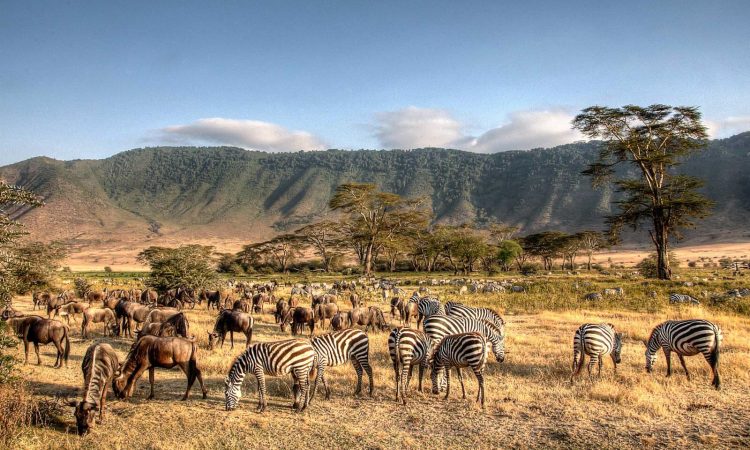 THE BEAUTY OF AN ANCIENT VOLCANIC LANDSCAPE
Wildlife in the Ngorongoro Crater.
Ngorongoro is one of Tanzania's most celebrated wildlife destinations, offering the chance to observe remarkable animals within a relatively compact and diverse landscape.
Black Rhinoceros
The endangered black rhino is among Ngorongoro's most sought-after wildlife encounters. Sightings are possible, but never guaranteed.
Lions & Predators
Look for lions and spotted hyenas across the open plains. Leopards are also present, although they can be difficult to find.
Elephants & Buffalo
Encounter impressive elephants and large buffalo grazing across the crater's varied habitats.
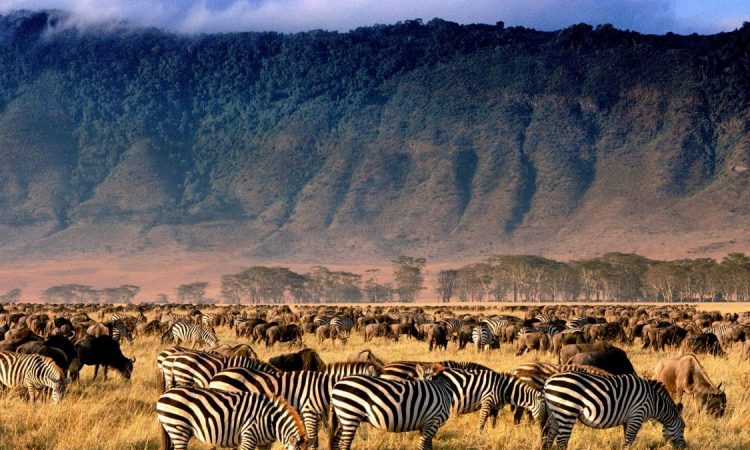
Zebras & Wildebeest
Resident grazing herds help make Ngorongoro one of northern Tanzania's most fascinating wildlife ecosystems.
Hippos & Wetland Wildlife
Permanent water sources and wetlands attract hippos, waterbirds and other wildlife throughout the year.
Flamingos & Birdlife
Lake Magadi and surrounding habitats support diverse birdlife, including flamingos when conditions are suitable.
Wildlife sightings depend on natural conditions, season and animal behavior. No particular sighting is guaranteed.
Discover the Crater's Natural Diversity.
Within the crater's dramatic walls, several distinct habitats create an exceptional environment for wildlife.
Grassland Plains
Open grazing areas provide opportunities to observe zebras, wildebeest, buffalo and predators.
Swamps & Springs
Water-rich habitats attract hippos, elephants, birds and other animals.
Forests & Acacia Trees
Wooded areas offer shelter and feeding opportunities for different wildlife species.
Lake Magadi
This shallow alkaline lake forms an important part of the crater ecosystem and attracts waterbirds.
 AN UNFORGETTABLE CRATER SAFARI
From the Crater Rim to the Wildlife Below.
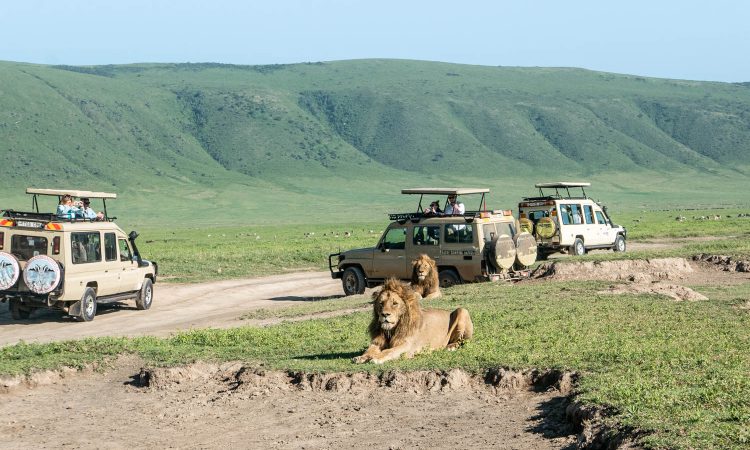
Descending into Ngorongoro Crater is one of the most memorable moments of a northern Tanzania safari.
Your adventure begins in the cool highlands, where breathtaking viewpoints reveal the vast crater floor. From there, the descent leads into a remarkable world of grasslands, wetlands and forests.
During your game drive, your guide helps you explore designated routes, identify wildlife and understand the unique ecology of this ancient volcanic landscape.
Ngorongoro can be explored as part of a dedicated excursion or combined with other northern Tanzania destinations, including Serengeti National Park, Tarangire and Lake Manyara.
Explore Crater Safari Options ↗Explore the Wider Ngorongoro Conservation Area.
Beyond the crater lies a landscape rich in natural beauty, cultural heritage and human history.
Maasai communities have a longstanding connection with the Ngorongoro highlands. Where appropriately arranged, visitors can learn about Maasai traditions through designated cultural experiences.
The wider conservation area also includes Olduvai Gorge, an internationally important archaeological site associated with discoveries that have helped scientists understand early human evolution.
Cultural and archaeological visits are separate from a crater-floor game drive and may require additional travel time, fees and advance arrangements.
Explore Cultural Experiences ↗ THE CULTURAL LANDSCAPES OF NGORONGORO
Best Time to Visit Ngorongoro Crater.
Ngorongoro offers rewarding wildlife viewing throughout the year, with each season bringing different scenery and travel conditions.
Dry Season
Generally drier conditions make this a popular period for wildlife viewing, although visitor numbers can be higher.
Green Landscapes
Seasonal rains encourage fresh vegetation and beautiful scenery, while wildlife remains present in the crater.
Long Rains
Lush landscapes and changing weather conditions characterize this season. Some roads may become muddy after heavy rain.
The crater rim is at high elevation and can be cold, especially during early mornings and evenings.
Planning Your Ngorongoro Safari.
A little preparation can make your visit to Ngorongoro more comfortable and rewarding.
- Start Early An early departure can help maximize your available game-drive time.
- Bring Warm Clothing The crater rim can be surprisingly cold, particularly in the morning.
- Choose Accommodation Carefully Consider staying near the crater rim or around Karatu, depending on your budget.
- Confirm Safari Inclusions Check conservation fees, crater descent fees, transport, meals and accommodation.
- Respect Conservation Rules Follow your guide's instructions and remain within permitted visitor areas.
 EXPERIENCE THE BEAUTY OF NGORONGORO
Combine Ngorongoro with Serengeti National Park.
Ngorongoro and Serengeti are two of Tanzania's most remarkable safari destinations.
Combining them gives you the opportunity to experience Ngorongoro's wildlife-rich volcanic landscape alongside the Serengeti's vast plains and legendary wildlife.
Discover Serengeti National Park ↗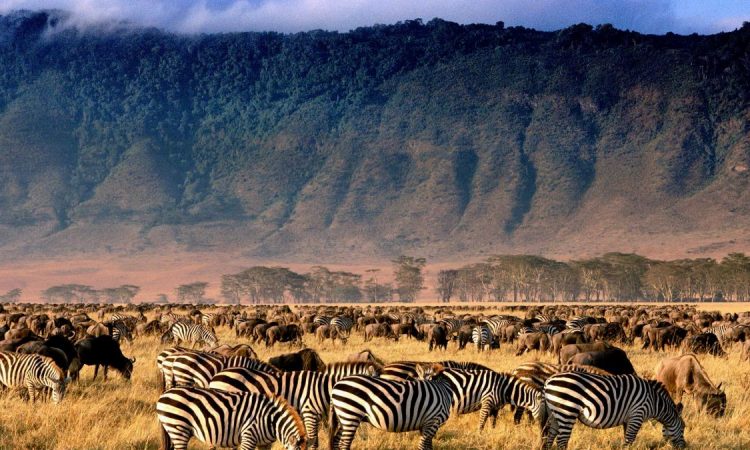
Ngorongoro Crater Frequently Asked Questions.
Everything you need to know before planning your Ngorongoro safari.
What is Ngorongoro Crater famous for?
Ngorongoro is famous for its enormous volcanic caldera, spectacular landscapes and remarkable concentration of wildlife, including endangered black rhinoceroses.
Where is Ngorongoro Crater located?
Ngorongoro Crater is located in northern Tanzania within the Ngorongoro Conservation Area, west of Karatu and southeast of Serengeti National Park.
Can you see the Big Five in Ngorongoro Crater?
The crater is home to all five Big Five species, although leopards and black rhinos can be difficult to spot. Sightings are not guaranteed.
When is the best time to visit Ngorongoro Crater?
Ngorongoro can be visited throughout the year. June to October is a popular dry-season period, while wetter months bring lush scenery.
Is Ngorongoro Crater part of Serengeti National Park?
No. Ngorongoro Crater is part of the separately managed Ngorongoro Conservation Area, which borders Serengeti National Park.
Can I visit a Maasai village near Ngorongoro?
Designated cultural experiences may be available through authorized arrangements, subject to local rules and availability.
How long should I spend at Ngorongoro Crater?
Many travelers include a crater-floor game drive in a northern Tanzania safari itinerary. Your ideal schedule depends on travel distances, entry arrangements and other activities.
Is Ngorongoro Crater suitable for families?
Yes. Ngorongoro is a popular destination for family safaris. Itineraries can be discussed according to children's ages, travel preferences and accommodation needs.